Red pimples
Comedogenic Ingredients: What Actually Clogs Pores? | Dermatologist Guide
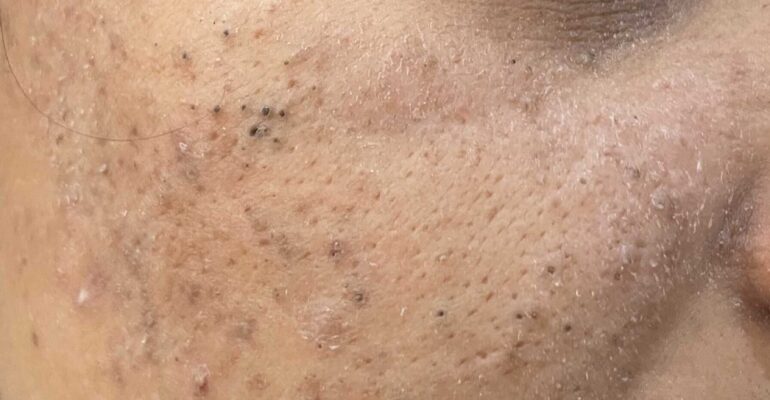
Comedogenic ingredients are oils, waxes, and fatty esters that can form comedones (blackheads and whiteheads) by trapping sebum and dead skin cells inside hair follicles. The 0–5 comedogenicity rating scale comes from rabbit ear assays. Studies show these results don't always translate to human skin, so treat ratings as a rough guide rather than a strict rule. A finished product's pore-clogging potential depends on the entire formula (concentration, vehicle, base, and balancing actives) and not just one isolated ingredient.
Have you ever dealt with persistent breakouts or stubborn comedones even while following your skincare routine faithfully? Sometimes, the routine itself is part of the problem. Certain ingredients in moisturizers, sunscreens, makeup, and hair products can contribute to clogged pores in people prone to them.
This guide combines published research, dermatological experience, and ingredient databases (PubMed, CosIng, and Dr. Baumann's Skin Type Solution). It also provides an honest look at where the science is weak, because the popular "comedogenic ratings" you see online are much less settled than they appear.
MUST TRY: Skip the guesswork, take ROUTINE FINDER and get free dermatologist-approved products and regimes customised to your skin and hair needs.
What Are Comedogenic Ingredients?
Comedogenic ingredients are substances that can block pores and contribute to blackheads, whiteheads, and, in some people, inflamed acne lesions. They are thought to help form comedones by trapping sebum and dead skin cells inside the hair follicle.
Many of these ingredients are emollients, waxes, or fatty compounds added for smoothness, hydration, or shine. They are useful in the right product, but not every skin type tolerates them equally.
The concept has a long history: the term "acne cosmetica" was introduced in 1972 after researchers noticed low-grade, persistent comedonal acne in adult women and linked it to facial cosmetics. In that work, about half of 25 facial creams tested in the rabbit ear canal were found to be mildly comedogenic.
Why Should You Avoid Comedogenic Ingredients?
In rabbit ear assays, these ingredients produce comedone-like changes, and the concern is that they may do the same in oily or acne-prone human skin. Caution is most reasonable if:
You are above 25 and still experience acne or comedones.
You have resistant acne that does not respond well to standard treatments.
You have oily-sensitive or combination skin (as per Dr. Baumann's classification).
If none of these apply to you, there is usually little reason to avoid these ingredients on principle.
Do Comedogenic Ingredients Always Make the Product Comedogenic?
No. The presence of a single comedogenic ingredient does not automatically make the entire formulation pore-clogging. Human-model findings show that finished products behave differently than isolated ingredients tested individually.
Factors that change the outcome include:
Formulation Synergy: Active ingredients like salicylic acid, niacinamide, or retinoids may counteract pore-clogging effects by promoting cell turnover or regulating sebum. Topical retinoids, in particular, have strong clinical guideline support for treating acne.
Concentration: Ingredients with low-to-moderate comedogenicity may not cause breakouts in minimal amounts, especially when listed toward the tail end of an ingredient deck.
Vehicle and Base: Water-based or non-occlusive formulations are far less likely to clog pores, even if they contain mildly comedogenic agents.
Surfactants and Exfoliants: Surfactants help emulsify and rinse away excess surface oil and debris, lowering the overall risk of comedone formation.
Many acne-fighting formulations include comedogenic carriers or emollients yet stay non-comedogenic overall because they are buffered by active ingredients or low concentrations. Therefore, judging a product solely on the presence of one or two comedogenic ingredients can be misleading.
Warning Signs on a Label:
Several ingredients graded 3 or above, especially if positioned near the top of the list.
Formulas that feel overly occlusive or greasy, or those marketed to acne-prone users without balancing active ingredient
List of Comedogenic Ingredients
The following list is compiled from peer-reviewed scientific sources, especially the authoritative publication: Journal of the Society of Cosmetic Chemists (1989; 40:321–333), along with CosIng and dermatological literature.
Acetylated Hydrogenated Castor Glyceride |
Acetylated Lanolin |
Acetylated Lanolin Alcohol |
Acid Red 18 |
Acid Red 27 |
Acid Red 33 |
Acid Red 52 |
Acid Red 92 |
Acid Violet 43 |
Algae Extract |
Algin |
Almond Oil Glycereth-8 Esters |
Almond Oil PEG-6 Esters |
Almond Oil PEG-8 Esters |
Almond Oil/‚ÄãPolyglyceryl-10 Esters |
Arachidic Acid |
Arachis Hypogaea Oil |
Ascorbyl Palmitate |
Azulene |
Benzaldehyde |
Benzoic Acid |
oxybezone |
Butyl Methoxydibenzoylmethane |
Butyl Stearate |
Butylated Hydroxyanisole |
Calendula Officinalis Flower Oil |
Camphor |
Capric Acid |
Caprylic Acid |
Carthamus Tinctorius Seed Oil |
Castor Isostearate Beeswax Succinate |
Castor Isostearate Succinate |
Castor Oil Bis-Hydroxypropyl Dimethicone Esters |
Castor Oil Hydrogenated Ethoxylated |
Castor Oil Phosphate |
Castoryl Maleate |
Ceteareth-20 |
Ceteareth-60 Myristyl Glycol |
Cetyl Acetate |
Coconut Oil Aminoethoxyethanol Amides |
Coconut Oil Glycereth-8 Esters |
Coconut Oil Polyglyceryl-6 Esters |
Cocos Nucifera Oil |
Decyl Oleate |
Ethylhexyl Palmitate |
Evening Primrose Oil/‚ÄãPalm Oil Aminopropanediol Esters |
Glycine Soja Oil |
Helianthus Annuus Seed Oil |
Hydrogenated Apricot Kernel Oil |
Hydrogenated Apricot Oil Unsaponifiables |
Hydrogenated Argania Spinosa Kernel Oil |
Hydrogenated Avocado Oil |
Hydrogenated Black Currant Seed Oil |
Hydrogenated Castor Oil |
Hydrogenated Castor Oil Behenyl Esters |
Hydrogenated Castor Oil Dimer Dilinoleate |
Hydrogenated Castor Oil Hydroxystearate |
Hydrogenated Castor Oil Isostearate |
Hydrogenated Castor Oil Stearate |
Hydrogenated Castor Oil Triisostearate |
Hydrogenated Coconut Oil |
Hydrogenated Corn Oil |
Hydrogenated Cottonseed Oil |
Hydrogenated Cranberry Seed Oil |
Hydrogenated Evening Primrose Oil |
Hydrogenated Grapeseed Oil |
Hydrogenated Hemp Seed Oil |
Hydrogenated Jojoba Oil |
Hydrogenated Macadamia Seed Oil |
Hydrogenated Mineral Oil |
Hydrogenated Oat Kernel Oil |
Hydrogenated Olive Oil |
Hydrogenated Olive Oil Caprylyl Esters |
Hydrogenated Olive Oil Cetyl Esters |
Hydrogenated Olive Oil Decyl Esters |
Hydrogenated Olive Oil Lauryl Esters |
Hydrogenated Olive Oil Myristyl Esters |
Hydrogenated Olive Oil Stearyl Esters |
Hydrogenated Olive Oil Unsaponifiables |
Hydrogenated Palm Kernel Oil |
Hydrogenated Palm Oil |
Hydrogenated Palm/‚ÄãPalm Kernel Oil PEG-6 Esters |
Hydrogenated Peanut Oil |
Hydrogenated Pistacia Vera Seed Oil |
Hydrogenated Prunus Domestica Seed Oil |
Hydrogenated Rapeseed Oil |
Hydrogenated Rice Bran Oil |
Hydrogenated Ricinus Communis Seed Oil |
Hydrogenated Rosa Canina Fruit Oil |
Hydrogenated Soybean Oil |
Hydrogenated Sunflower Seed Oil |
Hydrogenated Sunflower Seed Oil Esters |
Hydrogenated Sunflower Seed Oil Glyceryl Esters |
Hydrogenated Sunflower Seed Oil Polyglyceryl-3 Esters |
Hydrogenated Sweet Almond Oil |
Hydrogenated Sweet Almond Oil Unsaponifiables |
Hydrogenated Vegetable Oil |
Hydrogenated Wheat Germ Oil |
Hydroxylated Lanolin |
Isocetyl Alcohol |
Isodecyl Oleate |
Isopropyl Isostearate |
Isopropyl Lanolate |
Isopropyl Linoleate |
Isopropyl Myristate |
Isopropyl Palmitate |
Isostearyl Isostearate |
Isostearyl Neopentanoate |
Laneth-10 |
Laneth-10 Acetate |
Laneth-15 |
Laneth-16 |
Laneth-40 |
Laneth-75 |
Lanolin |
Lanolin Acid |
Lanolin Alcohol |
Lanolin Cera |
Lanolin Oil |
Lanolin Wax |
Laureth-4 |
Linseed Oil Polyglyceryl-4 Esters |
Linseed Oil/‚ÄãPalm Oil Aminopropanediol Esters |
Maleated Soybean Oil |
Mink Oil |
Moringa Oil/‚ÄãHydrogenated Moringa Oil Esters |
Myristic Acid |
Myristyl Lactate |
Myristyl Myristate |
Oenothera Biennis Oil |
Olea Europaea Fruit Oil |
Oleth-10 |
Oleth-3 |
Oleyl Alcohol |
Orbignya Oleifera Seed Oil |
Palmitic Acid |
Peach Kernel Oil Glycereth-8 Esters |
PEG-10 Castor Oil |
PEG-10 Hydrogenated Castor Oil |
PEG-100 Hydrogenated Castor Oil |
PEG-15 Castor Oil |
PEG-18 Castor Oil Dioleate |
PEG-2 Castor Oil |
PEG-2 Hydrogenated Castor Oil |
PEG-20 Castor Oil |
PEG-20 Hydrogenated Castor Oil |
PEG-200 Castor Oil |
PEG-25 Castor Oil |
PEG-25 Hydrogenated Castor Oil |
PEG-30 Castor Oil |
PEG-30 Hydrogenated Castor Oil |
PEG-30 Hydrogenated Castor Oil Isostearate |
PEG-35 Castor Oil |
PEG-36 Castor Oil |
PEG-4 Castor Oil |
PEG-40 Castor Oil |
PEG-40 Hydrogenated Castor Oil |
PEG-40 Hydrogenated Castor Oil Pca Isostearate |
PEG-5 Hydrogenated Castor Oil |
PEG-50 Hydrogenated Castor Oil |
PEG-50 Hydrogenated Castor Oil Isostearate |
PEG-50 Hydrogenated Castor Oil Triisostearate |
PEG-6 Hydrogenated Castor Oil |
PEG-60 Castor Oil |
PEG-60 Hydrogenated Castor Oil |
PEG-60 Hydrogenated Castor Oil Triisostearate |
PEG-7 Hydrogenated Castor Oil |
PEG-75 Castor Oil |
PEG-8 Castor Oil |
PEG-80 Hydrogenated Castor Oil |
Persea Gratissima Oil |
Potassium Castorate |
PPG-12-PEG-65 Lanolin Oil |
PPG-3 Hydrogenated Castor Oil |
PPG-40-PEG-60 Lanolin Oil |
PPG-5-Ceteth-10 Phosphate |
Prunus Amygdalus Dulcis Oil |
Prunus Armeniaca Kernel Oil |
Ricinus Communis Seed Oil |
Santalum Album Seed Oil |
Sesamum Indicum Oil Unsaponifiables |
Sesamum Indicum Seed Oil |
Shark Liver Oil |
Simmondsia Chinensis Seed Oil |
Sodium Castorate |
Sodium Lauryl Sulfate |
Sorbitan Oleate |
Soybean Oil PEG-8 Esters |
Steareth-10 |
Steareth-100 |
Steareth-2 |
Steareth-20 |
Stearyl Heptanoate |
Sulfated Castor Oil |
Sweet Almond Oil Polyglyceryl-4 Esters |
Sweet Almond Oil Polyglyceryl-6 Esters |
Triethanolamine |
Xylene |
Do Comedogenic ingredients always make the product comedogenic?
It’s important to understand that the presence of a comedogenic ingredient does not automatically render the entire formulation comedogenic.
The final comedogenicity of a product depends on several critical factors:
Formulation synergy: Certain active ingredients like salicylic acid, niacinamide, or retinoids may counteract pore-clogging effects by promoting cell turnover or sebum regulation.
Concentration: Ingredients with low to moderate comedogenicity may not cause breakouts if used in minimal amounts, especially when listed toward the end of the ingredient list.
Vehicle and base: Non-occlusive or water-based formulations are less likely to clog pores, even if they contain mildly comedogenic agents.
Presence of surfactants and exfoliants: Surfactants can help emulsify and rinse away oil and debris, mitigating the risk of comedone formation.
Clinical Perspective: Many acne-fighting formulations include comedogenic carriers or emollients but remain non-comedogenic overall because they are buffered by active ingredients or low concentrations. Therefore, judging a product solely based on the presence of one or two comedogenic ingredients may be misleading.
However, caution is warranted when:
Multiple comedogenic ingredients with a rating of 3 or above are present, especially near the top of the list.
The product is occlusive, greasy, or targets sensitive/acne-prone users without proper balancing actives.
How Dermatocare Uses This Data
We keep the comedogenic ingredient list as a precautionary screening tool, not as definitive proof that an ingredient will break you out. Our working rules are:
Grade 3 to 5 ingredients: Avoid entirely, even if they appear near the end of the ingredient list in acne-prone skin only.
Grade 1 to 2 ingredients: Avoid only if they appear at the top 5 to 7 ingredients, which usually indicates a higher concentration in acne-prone skin only.
Finished Formulations Matter: Even if an ingredient is comedogenic on its own, solvents and formulation factors can reduce its pore-clogging potential. A product labeled "non-comedogenic" is a reasonable starting point keeping its regulatory limits in mind.
Because these are precautionary rules rather than validated cut-offs, your own skin's response is the ultimate test. Always patch-test new products and introduce them one at a time.
Frequently asked questions
It describes a substance that can promote comedones (blackheads and whiteheads) by contributing to blocked hair follicles. It is a term rooted in cosmetic testing and does not mean a product will definitively cause acne for everyone.
Conclusion
Spotting comedogenic ingredients in a shop or online can feel overwhelming, and the science behind the ratings is less certain than the internet suggests. That is why Dermatocare built the Routine Finder Tool, which:
Screens the ingredient lists of 500+ global brands.
Flags comedogenic and irritating substances.
Tailors recommendations to your age, skin type, acne severity, and concerns.
If you are struggling with persistent acne, especially beyond adolescence, it is worth checking the ingredients in your products. These ingredients may not affect everyone, but people with oily or acne-prone skin should remain extra cautious.
References
Kligman AM, Mills OH Jr. "Acne cosmetica." Arch Dermatol 1972;106(6):843-850.
Frank SB. Is the rabbit ear model, in its present state, prophetic of acnegenicity? J Am Acad Dermatol1982;6:373-377.
Fulton JE Jr, Pay SR, Fulton JE 3rd. Comedogenicity of current therapeutic products, cosmetics, and ingredients in the rabbit ear. J Am Acad Dermatol 1984;10(1):96-105.
Draelos ZD, DiNardo JC. A re-evaluation of the comedogenicity concept. J Am Acad Dermatol 2006;54(3):507-512.
Nguyen SH, Dang TP, Maibach HI. Comedogenicity in rabbit: some cosmetic ingredients/vehicles. Cutan Ocul Toxicol 2007;26(4):287-292.
Starzyk T, Aust N, Schur N, Miller R. Comedogenicity in cosmeceuticals: a review of clinical relevance,regulatory gaps, and future directions. JAAD Reviews 2025.
Reynolds RV, Yeung H, Cheng CE, et al. Guidelines of care for the management of acne vulgaris. J Am Acad Dermatol 2024;90(5):1006.e1-1006.e30.
Medical & Editorial Disclaimer: This guide is educational content, not individualised medical advice, diagnosis, or treatment. It reflects Dermatocare's own ingredient-database screening, applied as a precautionary framework, together with publicly available formulation and regulatory information. This content does not replace individualized consultation with a dermatologist. Always verify the current ingredient list against the product label, since formulations change without notice.